Assessment Technologies: Speaking & Writing
A 42-academic-hour CPD programme for English teachers who want to make defensible assessment decisions, standardise marking and give feedback that helps learners improve.
Criteria-based assessment
CEFR-informed Speaking and Writing decisions rather than intuition or impressionistic marking.
Practice and calibration
Real performances, scripts and benchmark comparisons for more consistent judgement.
Professional feedback
Reliable marking language, reusable tools and standards that can be used in your own context.
Course at a glance
The previous June-July intake has finished. The next group is now collected through a waiting list.
Waiting list open
The next intake will be announced shortly. Join the waiting list to receive the schedule, application deadline and payment details before enrolment opens.
Who this programme is for
The course is for teachers and academic teams who need a more reliable way to evaluate advanced learner performance.
Classroom and exam teachers
- teachers working with upper-intermediate and advanced learners;
- Cambridge and IELTS preparation tutors;
- teachers who assess Speaking and Writing regularly.
Academic and programme roles
- teacher trainers and academic coordinators;
- materials developers and syllabus designers;
- staff responsible for moderation and standardisation.
Prior examiner experience is not required. Participant English level: C1+.
What you will be able to do
Four practical outcomes sit at the centre of the programme.
Make defensible assessment decisions
Apply criteria consistently and distinguish related constructs such as range, accuracy, cohesion, communicative effect and task fulfilment.
Diagnose learner performance
Identify what is actually limiting a score and separate language problems from task, discourse and delivery problems.
Standardise marking
Compare decisions against benchmarks and develop shared internal standards for teams.
Give useful feedback
Turn assessment into practical learner guidance, correction priorities and reusable feedback language.
How learning works
The course combines live calibration, independent analysis and assessed work.
Prepare and analyse
Participants review criteria, learner samples and short input tasks on Canvas.
Compare and calibrate
Live sessions focus on evidence, disagreement, benchmark comparison and feedback language.
Apply and reflect
Assignments consolidate marking decisions and prepare participants for the final assessment.
Programme
The programme is organised around three practical strands: Speaking, Writing and Standardisation.
Speaking Assessment
- language, discourse and interaction;
- fluency, pronunciation and communicative achievement;
- IELTS and Cambridge-informed scoring decisions;
- feedback that leads to better spoken performance.
Writing Assessment
- task response, content and reader effect;
- organisation, cohesion and paragraphing;
- range, accuracy and register;
- comment-bank development and written feedback.
Standardisation
- benchmark comparison and moderation;
- criteria interpretation across levels;
- consistent grading language;
- final assessment preparation.
Programme structure
The course covers Speaking and Writing assessment through criteria analysis, benchmark comparison, feedback practice and final standardisation tasks. New dates will be announced to the waiting list.
Assessment foundations
- Language: grammar and vocabulary features that characterise successful candidates; acceptable mistakes; balancing fluency, accuracy and sophistication.
- Organisation: coherence and cohesion in written discourse; flexible use of cohesive devices; organisational patterns that serve communicative purpose.
Communicative achievement and pronunciation
- Writing: task fulfilment, genre awareness, register and function; holding the target reader's attention and communicating ideas effectively.
- Speaking: pronunciation features that are actually assessed; common misconceptions, pitfalls and typical weak areas.
Discourse management and advanced lexis
- Speaking: steering interaction, maintaining relevance, cohesion, extension and managing responses beyond the task.
- Writing: range, precision and appropriacy; selecting sophisticated vocabulary that enhances clarity and impact.
Grammar, interaction and feedback priorities
- Writing: grammatical control and flexibility; patterns that enhance effectiveness; errors that impede communication; punctuation.
- Speaking: active listening, responding, extending interaction, engagement and communicative intent.
Setting the standard: final assessment
- Speaking: criteria, Can-Do statements and benchmark performances; establishing standards across levels and exams; final speaking assessment task.
- Writing: revisiting writing criteria and standardisation principles; aligning judgements across scripts and levels; final writing assessment task.
Course instructors
The course is taught by trainers with direct expertise in advanced assessment, feedback and exam-informed criteria.
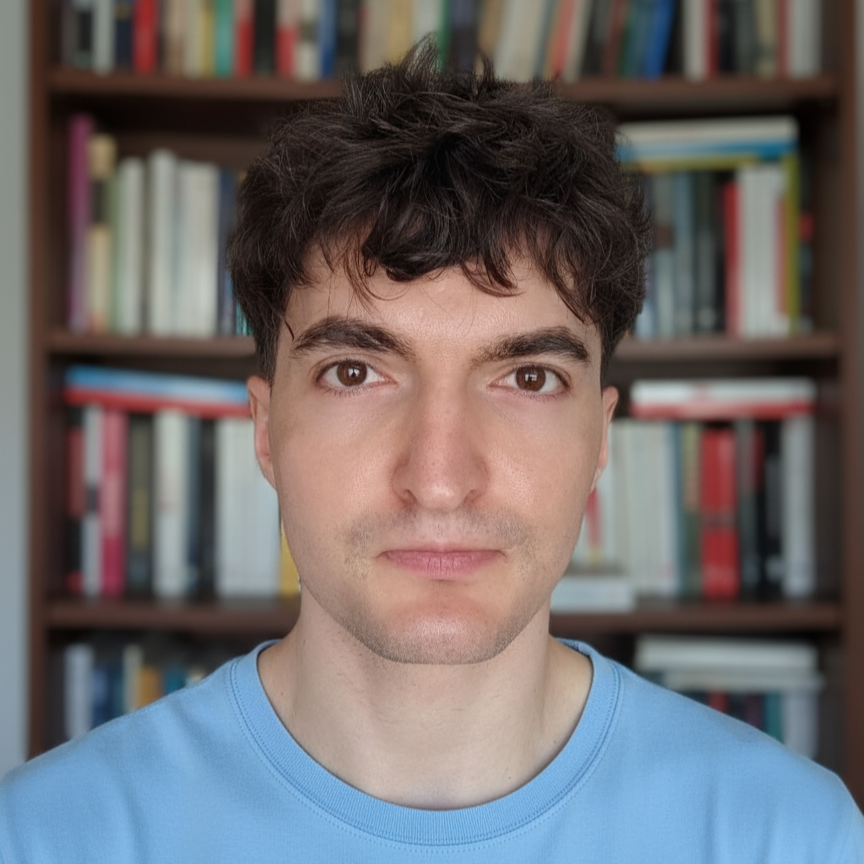
Vladimir Pavlovich
- C2 Proficiency Grade A;
- IELTS 9.0;
- MA Linguistics and MA Education;
- course design and teacher training.

Susana Safarova
- C2 Proficiency Grade A;
- CELTA A and DELTA;
- IELTS Expert;
- advanced speaking performance and feedback.
Pricing and enrolment
The previous intake has finished. These terms describe the current programme model for the next announced group.
Reduced full-payment rate when the complete programme is paid for before the course starts.
- complete 42-academic-hour programme;
- live sessions and Canvas access;
- course materials and assessment assignments;
- final assessment and certification subject to successful completion.
2 payments of 15,000 ₽. The first payment confirms the place; the second payment date is confirmed before enrolment.
- same 42-academic-hour programme;
- same live sessions, Canvas access and materials;
- same assessment and certification requirements;
- payment dates specified in enrolment documents.
Withdrawals and refunds
Refunds and withdrawals are handled in accordance with the course agreement and the applicable refund policy. Any amount returned is calculated after deducting services already provided and other documented costs.
Documents awarded upon successful completion
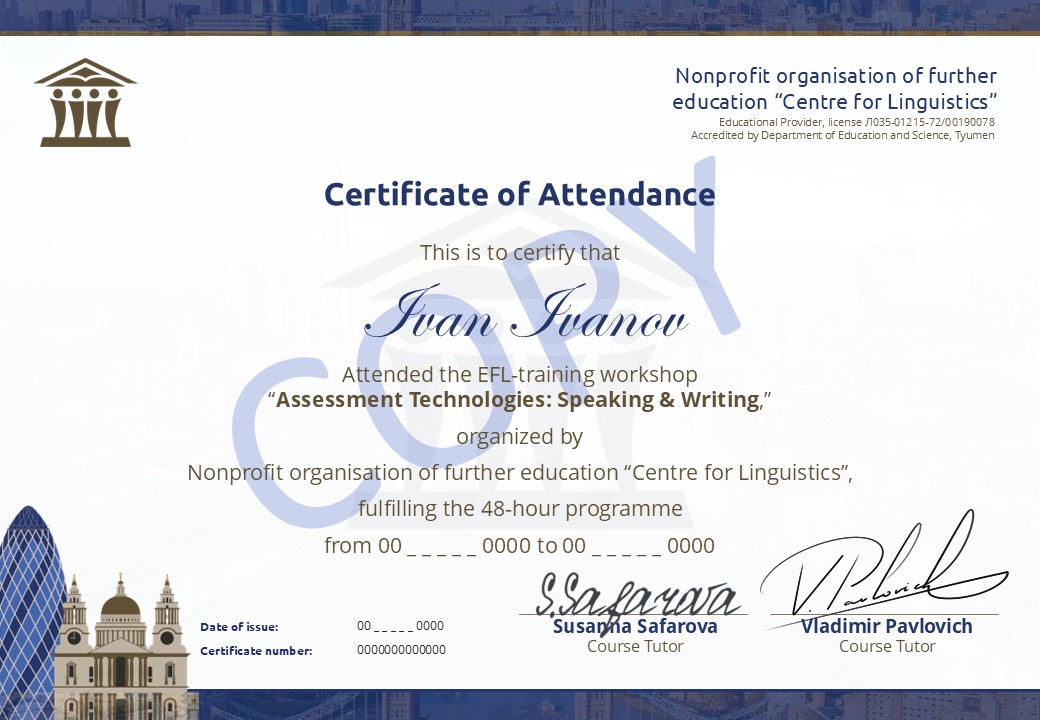
Certificates are not automatic; they are awarded when the completion requirements are met.
Удостоверение о повышении квалификации
Issued in accordance with the programme and enrolment documentation.
Professional Development Certificate in English
Confirms completion of a 42-academic-hour programme.
Completion requirements
- at least 75% live attendance;
- at least 75% of assignments completed;
- at least 80% on assessed assignments;
- at least 80% on the final assessment.

FAQ
Only secondary questions remain here; the main conditions are listed above.
Ready to assess with confidence?
Join the waiting list for the next 42-academic-hour CPD programme in Speaking and Writing assessment.
What learners say about AEE

The Assessment Technologies: Speaking and Writing course combined extensive reading with highly practical, thought-provoking assignments. Thanks to Susan and Vladimir, I now feel much more confident analysing and assessing my students’ speaking and writing.
View full