Beyond the Plateau: Developing Productive Skills at C1 and C2
A practical, research-informed webinar for advanced learners and teachers exploring what it takes to make progress in speaking and writing at C1 and C2.
At higher levels, knowing more English does not automatically mean communicating better. Learners may be fluent yet imprecise, use sophisticated vocabulary without sufficient control, or understand what effective writing looks like without being able to produce it consistently.
In this webinar, we will explore how autonomy, collaboration, regular productive practice and meaningful assessment can help learners move from knowing the language to controlling it.
From Knowledge to Control
Why progress changes as learners approach C1 and C2, and why greater fluency and a larger vocabulary are not enough without precision, flexibility and communicative control.
Independence Is Not Abandonment
How structured self-study, study buddies, peer evaluation and teacher guidance can help advanced learners take greater responsibility without being left to learn alone.
What is this webinar about?
Reaching an advanced level creates a new set of challenges. Accuracy may stop developing automatically, sophisticated vocabulary may still be used imprecisely, speaking can remain fluent but generic, and learners may struggle to evaluate the effectiveness of their own writing. At this stage, simply completing more exercises or more exam papers is rarely enough. Learners need regular opportunities to produce language, make decisions, interact with others, evaluate performance, revise their work and transfer what they have learnt to new situations. During the webinar, we will look at how these principles can be incorporated into preparation for Cambridge C1 Advanced and C2 Proficiency. We will also show examples of materials and procedures used in our own C1/C2 courses.
Why progress changes at C1 and C2
What happens when knowing more English is no longer enough, and why accuracy, lexical precision, discourse control, register and interaction become increasingly important.
Speaking beyond the Speaking lesson
How exam-style speaking can be integrated naturally throughout a course, from lead-in questions to photographs, collaborative discussions and speaking tasks growing out of wider language work.
Writing as a process, not a submission
Why writing development requires progression: practice with genre elements, a first draft, peer evaluation, revision and only then teacher assessment.
Autonomy, feedback and assessment
How self-study materials, peer collaboration and learner evaluation can work alongside teacher feedback and meaningful assessment at advanced levels.
Who should attend?
This webinar is designed for two groups.
Advanced learners and exam candidates
For learners working towards C1 or C2 who want to understand why progress can become more difficult at higher levels, and how to make speaking and writing practice more effective.
English teachers
For teachers working with advanced learners who want to integrate productive skills more systematically and make peer and self-evaluation a genuine part of learning.
No specialist knowledge of language‑teaching methodology is required. The recommended level of English is C1.
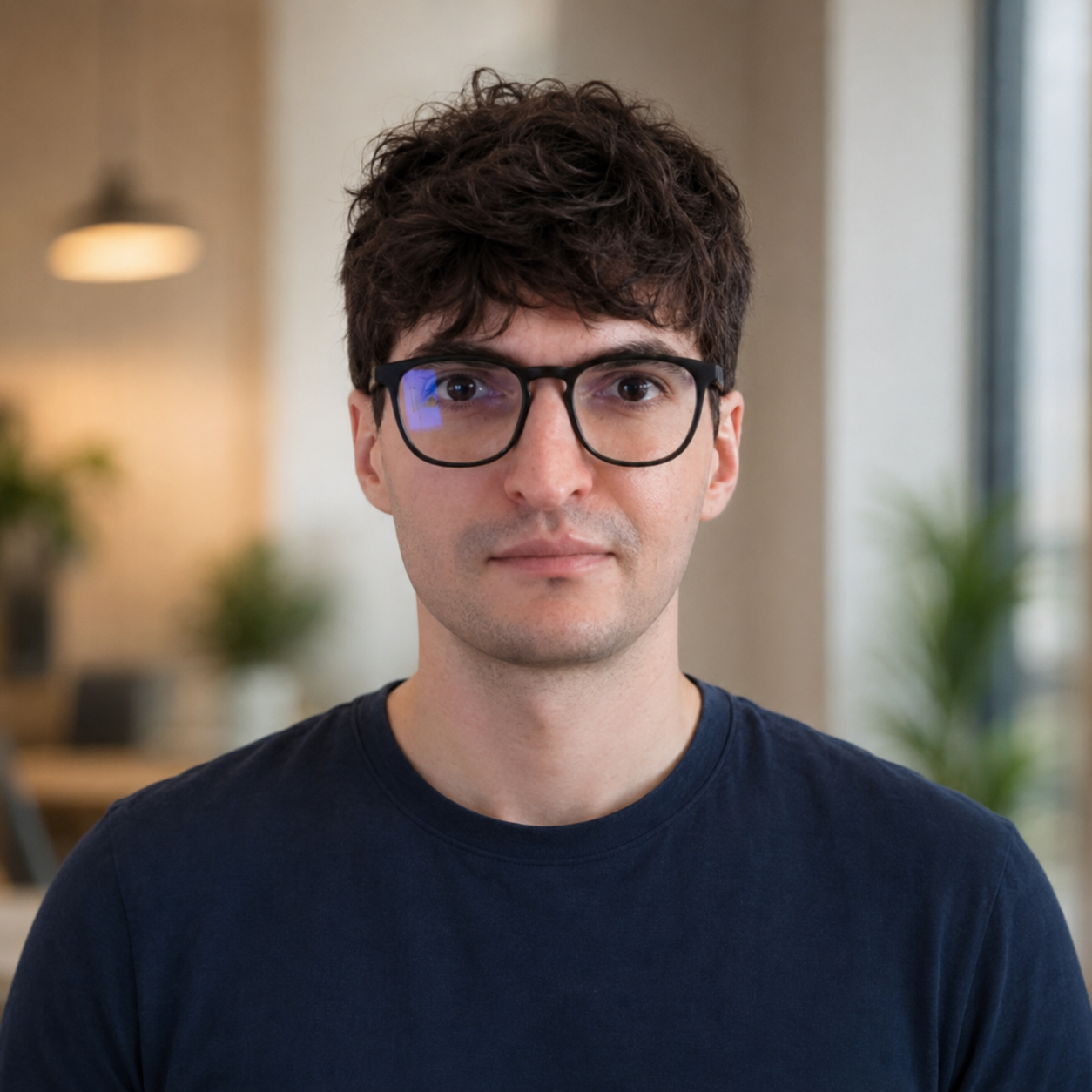
Meet Your Teacher: Vladimir Pavlovich
English has been central to both my academic and professional life for many years. My background in translation, linguistics, philology and education has shaped the way I teach: with a strong emphasis on precision, effective communication and a genuine understanding of how advanced language learning works.
My qualifications include:
- TESOL certification
- MA Linguistics, MA Education, PhD candidate
- CAE Grade A, CPE Grade A, IELTS Band 9.0
- Co-author of ESL courses for high-level learners
- Founder of a VK community with 65K+ members
My aim is to help motivated learners develop the confidence, flexibility and precision required to use English at an advanced level.
Join the live session
Discover why productive-skill development changes at C1 and C2 and how speaking, writing, peer collaboration, independent work and teacher feedback can form one coherent learning system.
The session will last approximately 50 minutes, followed by time for questions.
Participation is free.